Vol. 12 No. 2/1 (2026): Engaging Reflexive Decolonial Practices in Community Psychology Inquiry & Education
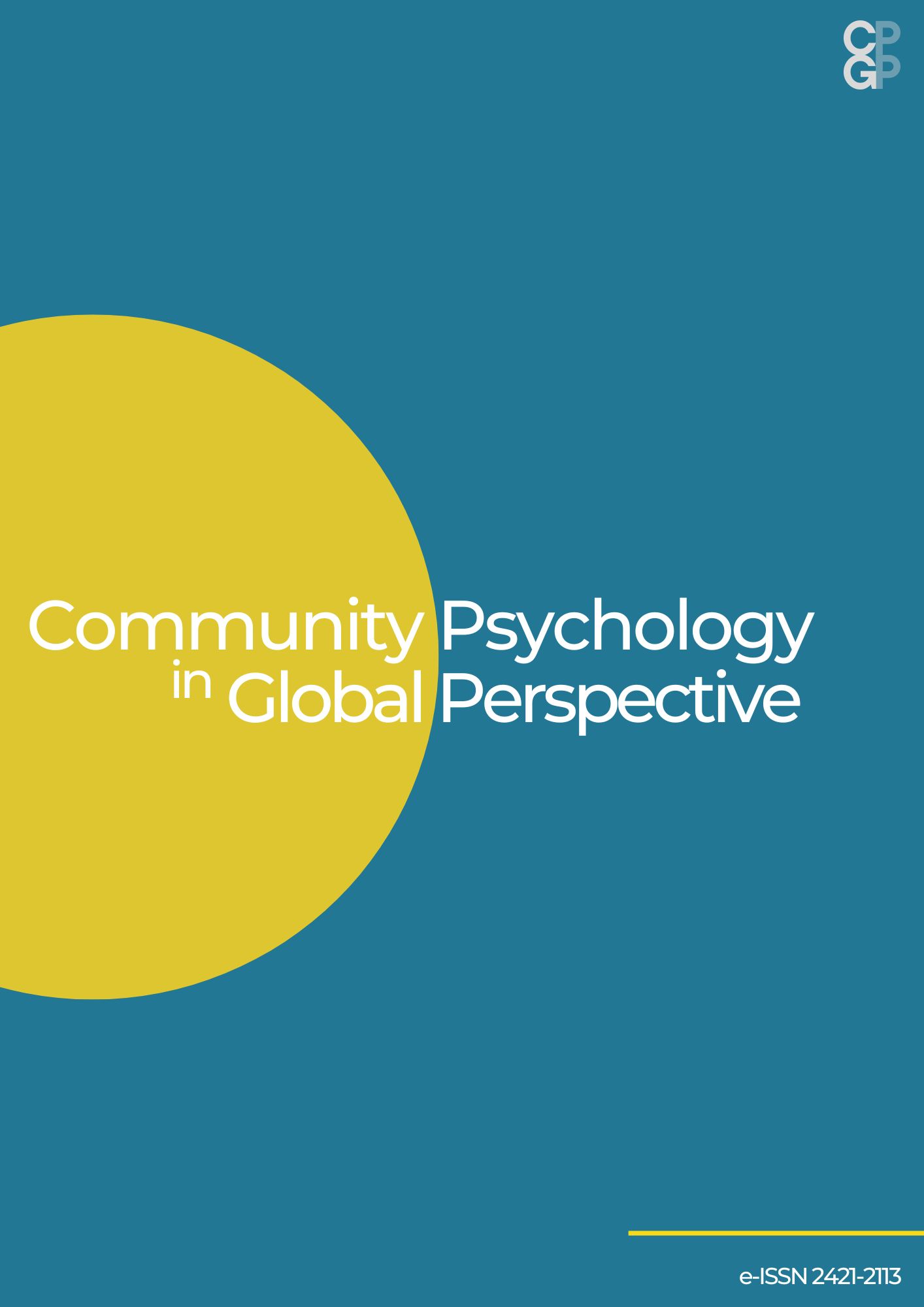
The second volume of the special issue Engaging Reflexive Decolonial Practices in Community Psychology Inquiry & Education gathers twelve contributions that move decoloniality from declaration to practice.
It opens with a critique of global academic knowledge systems and of the peer-review and publishing machinery that sustains them, then turns to the sites where coloniality is contested: clinical and community mental health services, participatory research with children in the United States, rural Andean youth in Peru, co-research with homeless people in Buenos Aires, Ifá/Òrìṣà spiritual communities, Sudanese women's testimony of wartime femicide, Zimbabwe's heritage-based curriculum, youth radio-making in Melbourne, and podcast pedagogies from Japan and the whiteness-focused counter-modernity inquiry.
The geography is not incidental. Africa, Asia, Latin America, Oceania, Europe and North America appear not as case studies gathered by a centre, but as sites of theory in their own right. The methods follow suit: collaborative autoethnography, medicine stories, radio, podcasting, diary entries, refusals of linear argument. Authors write reflexively from within their positionalities, declining neat resolutions.Guest editors Mazna Patka, Tiffeny R. Jiménez, Hana Shahin and Olya Glantsman have gathered work that refuses the comfort of critique at a distance.
Since its founding, Community Psychology in Global Perspective has committed itself to making explicit the ways in which culture organises experience, to ecological readings of individual and community well-being, and to field-based, culturally situated scholarship that advances social change and social justice. This volume takes that commitment to its sharpest edge, turning the framework on the discipline itself — an invitation to listen differently, and to rebuild community psychology accordingly.